Australian Consumer Law: Framework and Actions
The Australian Competition and Consumer Commission (ACCC), in October/November 2022, suo motu conducted an internet sweep to identify misleading environmental and sustainability marketing claims. It included a review of 247 company websites across a range of products including energy, vehicles, household products and appliances, clothing, footwear, and identified 57% of the businesses to have made concerning claims.
Following the internet sweep, in December 2023 ACCC released a Guide on Making Environmental Claims (Guidance 2023). Guidance 2023 brings false and misleading environmental and sustainability claim as a subject under the Australian Consumer Law. ACCC has clearly stated in the Guidance 2023, what might trigger enforcement action which speaks about their seriousness in handling greenwashing.
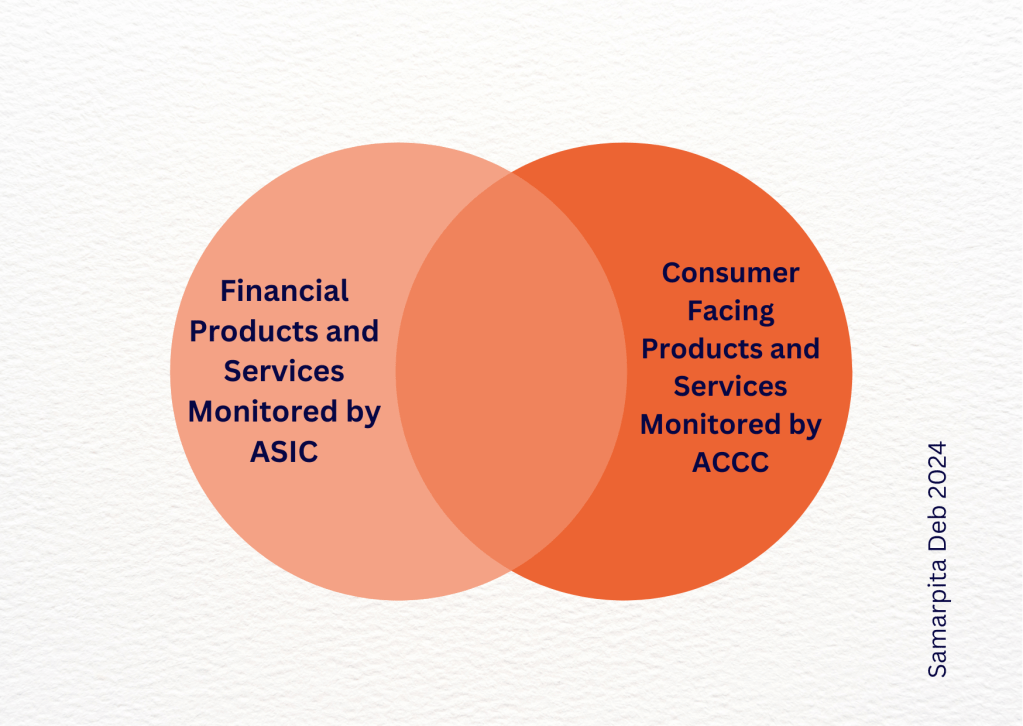
As ACCC plans to tackle several greenwashing claims following up from the internet sweep, we should expect to see litigations arising from violations of the Australian Consumer Law. ACCC also has set up a greenwashing reporting mechanism.
The legal framework under the ACL includes general prohibitions against misleading or deceptive conduct (Section 18), specific prohibitions against making false or misleading representations about goods or services (Sections 29, 33, 34), pecuniary penalties for contravention (Sections 29, 33, and 34), and compulsory information gathering powers under Section 155.
Australian Corporations Act and Australian Consumer Law have also emerged as powerful tools in several litigations that are happening all across Australia. The smart GC would do well by paying heed to the fundamental principles in these laws of avoiding misleading and deceptive conduct, false representations about goods or services, and misleading information about the nature of goods or services.
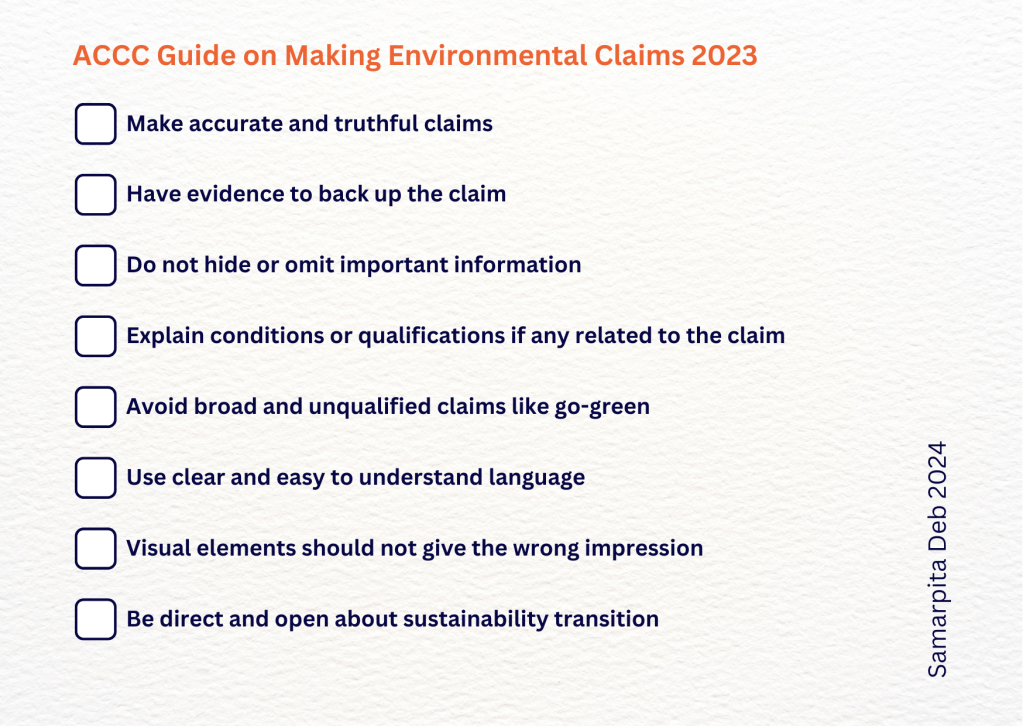
Fundamental principles in the Guidance 2023:
- Make accurate and truthful claims. No exaggeration, evaluate scientific claims, meaningful, future representations . What is really interesting is that businesses need to make reasonable efforts when the environmental claim originates from a third-party supplier and ACCC states that a larger business definitely has a higher burden of proof in this regard.
Important Information: ACCC has clearly stated that they are likely to take enforcement action where representations about future matters were made without reasonable grounds, or never had concrete plans for implementation, or knew, or was reckless about whether the claim was misleading. - Have evidence to back up the claim. In determining whether to take enforcement action in respect of environmental claims, ACCC will consider whether genuine efforts and appropriate steps were taken by the business to verify the accuracy of any information that they relied on. The scope and extent of due diligence undertaken will vary depending on the size of the business. ACCC also recommends that the supporting evidence is made public and easy to find.
- Do not hide or omit important information. Suppression of truth or hiding them in very fine print is as bad as making a false statement and this is what the ACCC tries to tackle in this principle. Misleading environmental claims cannot be defended by relying on disclaimers, or clarifications which are buried deep inside other texts. ACCC, in its very progressive guidance, also asks companies to consider the full lifecycle of a product or service. As a conscious consumer, this is an area which is near impossible for us to analyse and there are several companies who take advantage of this opacity.
- Explain conditions or qualifications if any related to the claims. Some claims are true only when tested in controlled environment and might be false in a normal day-to-day situation. ACCC suggests that enough information is provided to ensure that the consumer is able to understand what is needed to make these claims true.
- Avoid broad and unqualified claims like “green”, “go green”, “eco-friendly” etc. ACCC recommends that claims like these are qualified to avoid misleading consumers. Claims like “climate neutral”, or “net-zero” will fall in this category. The expectation is, when such claims are made, sufficient assessment is made using recognised methodologies, providing clear information about what is included and what is excluded, account for all types of green-house emissions and not just focus on carbon dioxide to avoid misleading, among others. Highly polluting industries are cautioned additionally by ACCC in making such claims.
- Use clear and easy to understand language. ACCC recommends avoiding technical or scientific language and using words that convey the common meaning.
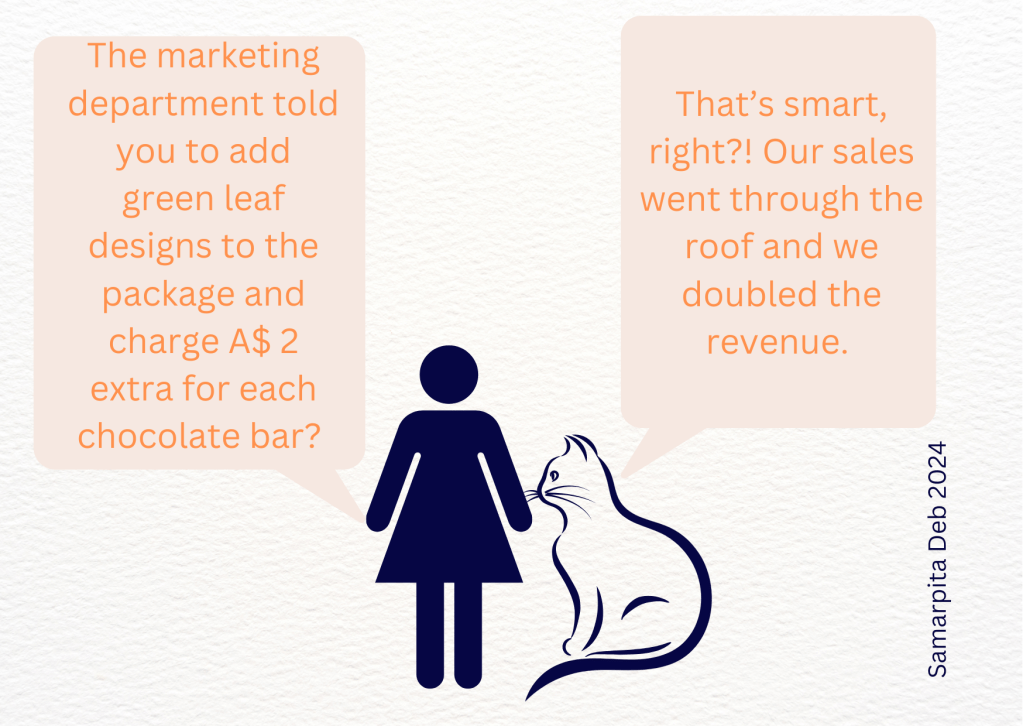
- Visual elements should not give the wrong impression. Do you know the number of times, I have grabbed something with a green on the cover, hoping it to have better environmental impacts than the regular packaging? Too many times. And how many times have I been fooled. Almost, every single time. This is very heartening to see that ACCC refers to this problem which is a sneaky greenwashing tactic used extensively.
- Be direct and open about the environmental sustainability transition. ACCC understands that transitioning to an environmentally sustainable business model is not a linear path and while a company might have made lots of progress in one area, there may be areas where they still contribute to negative impacts. In this principle, ACCC urges companies to remember the why, sometimes, the most important questions to ask when a company wants to make such a claim.
Australian Ad Standards: Framework
Australian Association of National Advertisers has a self-regulatory system which has laid out the following principles in their Code of Ethics and Environmental Claims Code about how environmental claims should be made.
The Code of Ethics says, claims should:
- comply with laws
- not mislead or deceive consumer or be likely to do so
- not imply benefits to environment to exploit community concerns where such benefits do not exist
The Environmental Claims Code requires that the claims are:
- provide a truthful and factual presentation, by not being misleading, displaying necessary disclaimers and qualifications, in a way that is clearly understood by consumers
- relevant and clearly explain the significance without overstating
- substantiated and verifiable
Consumers can complain to the Ad Standards Bureau if they are aggrieved by an advertisement that might be having greenwashing claims.
All opinions are personal.
Stay in the know,
Samarpita


 ESG for Lawyers
Leave a comment