The Competition Bureau of Canada acknowledges that there are several provisions in the Bill C-59 which require further clarification. To facilitate compliance with the new provisions, the Bureau is in the process of developing guidelines in consultation with the public.
Deceptive Marketing Practices Digest Volume 7
In the interim, the Bureau has released the Deceptive Marketing Practices Digest Volume 7 (the “Digest”) to provide businesses guidance on what can constitute greenwashing.
The Bureau has provided what could be called a basic definition of greenwashing, being environment claims that are deceptive because they are false, misleading, are not adequately and properly tested or substantiated.
Typical Greenwashing Claims
In the Digest, the Bureau offers some very helpful categories of greenwashing claims that they typically received.
- Composition claims. Claims about composition of products or their packaging, including exclusion of certain components which are bad for the environment such as microplastics.
- Claims about the production process of products. These complaints usually involve the claims about resources, energy, or material used in the process of producing a product. For example, use of renewable energy or carbon neutral product.
- Claims about the disposal of products after use. For example, claiming that a product is fully compostable or recyclable.
- Comparison claims. These can be comparison with products or services to past versions, or those of competitors.
- Fake claims. Claims that a product is eco friendly with no specification as to the why or the how. Often this kind of vague greenwashing claims are accompanied by imagery that doubles down on the feel good vibe like nature scenes.
- Claims about the future. Example, claims about being carbon neutral by a certain date without having a credible plan to deliver on the claim.
Practical Tips for Businesses
In addition to the overall categories of claims that the Bureau sees on greenwashing, the Bureau offers some high level tips for businesses to consider.
- Be truthful and not false or misleading. In making this recommendation, the Bureau looks at both the literal meaning and the general impression of a claim, which means that, even if the claim might be literally true, it can still create a false or misleading general impression about an environmental benefit, usually one of exaggeration. Additionally, the Bureau says that if there might be any key information necessary for consumers not to be deceived, it must be included as an integral part of such communication. However, this does not mean that making a materially false or misleading claim and providing a fine print or disclaimer will be acceptable.
- Proper and adequate testing of claims. As many environmental claims or performance claims, meaning that there are claims about the performance, efficacy, or length of life of a product. The general expectation among consumers will be that such a claim is backed up with proof. The testing required to support a claim will depend on the nature of the claim and must be completed before the claim is made to the public.
- Comparative claims. The Bureau recommends that every time a comparison is made, it is important for the business to be specific about what is being compared and also the extent of the difference between what is being compared.
- Avoiding of exaggeration. The Bureau notes that while even small changes can add up when it comes to the environmental impacts, small changes should not be marked as bigger than they are. This in turn ties back to the tip on being truthful.
- Avoiding vagueness, embrace granularity in environmental claims. for example, a claim that a particular product is eco friendly may convey the impression that the product is beneficial for the environment throughout its entire life cycle. However, as we know, their reality might be quite different. The Bureau expects that when such claims are made further granular details are included.
- Aspirational claims about the future. Given that this is one of the key complaints, the Bureau receives, it is no wonder that the Bureau warns about making such claims, especially when they are completely unsubstantiated.
Lessons from the Litigation Space
While private activists and environmental groups have been using the Competition Act to challenge environmental statements in Canada, with the passing of Bill C-59, I expect to see way more movement in this area from 2025 onwards.
That said, Canada has seen some pretty high profile action in connection with greenwashing.
Stand.Earth’s complaint against Lululemon
2024, Ongoing
In February 2024 Stand.Earth submitted a complaint to the Competition Bureau of Canada against Lululemon. Stand.Earth referred to Lululemon’s impact report released in 2022 to show its stark increase in emissions, which they say is in direct contradiction with their “Be Planet” advertisement campaign where Lululemon claims that their products and actions avoid environmental harm and contribute to restoring a healthy planet. Interestingly, the complaint acknowledges that Lululemon is taking steps to reduce the harm of its business and products on the environment. However, Stand.Earth points to the marketing campaign as going too far by creating the general impression that the company’s actions and products are positively contributing to the environment and a healthier planet.
Stand.earth has asked the Commissioner to seek a judicial order under section 74.1 (1) of the Competition Act such that Lululemon:
- Removes entirely its Be Planet marketing campaign from its website and all other public forms of communication;
- Issues a formal apology to all of its Canadian customers for providing them with false and misleading information; and
- Pays a fine up to 3% of Lululemon’s annual worldwide gross revenues, credited to the Environmental Damages Fund and to be paid to an organization for the purposes of climate mitigation and adaptation in Canada.
The Bureau has opened a formal investigation.
Keurig Canada’s $3 million penalty
2022, Decided
Keurig Canada had made several claims about the recyclability of their single used coffee pods and how those pods were easy to be prepared for recycling by peeling the lid off and emptying out the coffee grounds. These claims were made on Keurig’s website via social media, and on text and logos on the K-Cup pods and packaging.
The Bureau found that, outside the provinces of British Columbia and Quebec, K-Cup pods were not widely accepted in municipal recycling programs and some local recycling programs required additional steps to recycle the pods.
The Bureau’s investigation concluded that
- Keurig Canada’s claims regarding the recyclability of its single-use coffee pods are false or misleading in areas where they are not accepted for recycling; and
- Keurig Canada’s claims about the steps involved to prepare the pods for recycling are false or misleading in certain municipalities.
As part of this settlement, Keurig Canada agreed to:
- pay a $3 million penalty and donate $800,000 to a Canadian charitable organisation focused on environmental causes;
- pay an additional $85,000 for the costs of the Bureau’s investigation
- change its recyclable claims and the packaging of the K-Cup pods;
- publish corrective notices about the recyclability of its product on its websites, on social media, in national and local news media, in the packaging of all new brewing machines and via email to its subscribers : and
- enhance its corporate compliance program as necessary to promote compliance with the laws and prevent deceptive marketing issues in the future
Complaint to the Competition Commission against Sustainable Forestry Initiative (SFI)
2023, ongoing
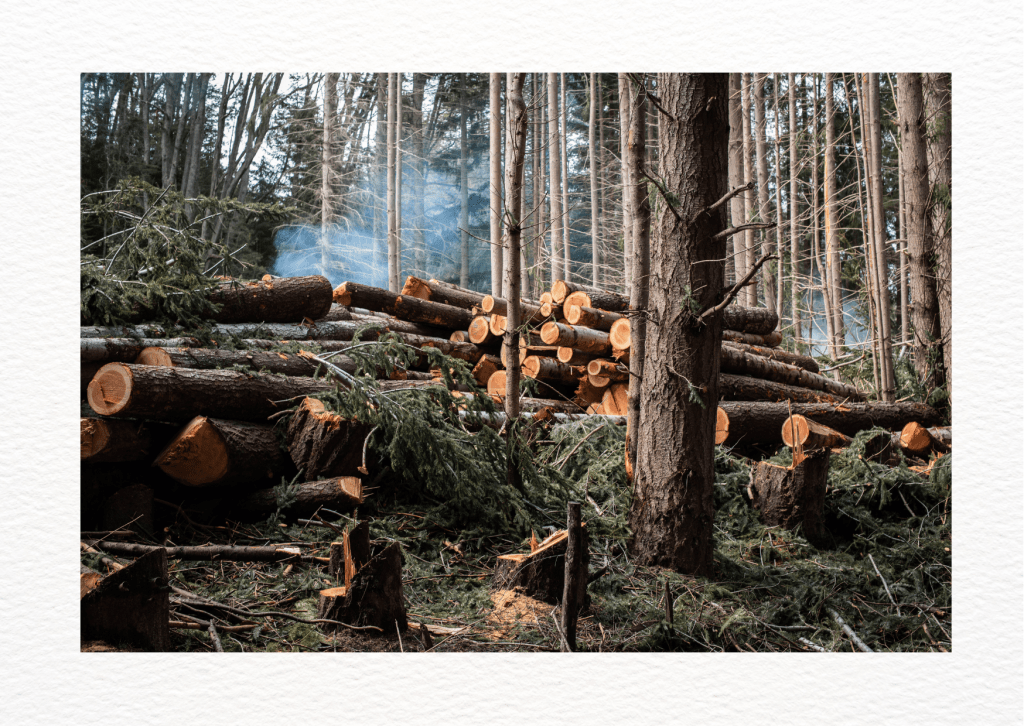
In February 2023, the Bureau opened an inquiry into SFI, North America’s largest certification system for sustainable forestry practices. Ecojustice, on behalf of several leading environmental organizations filed a complaint with the Bureau in November 2022. The complaint suggested that SFI’s ‘sustainable’ logging certification is ‘misleading’ and ‘false’.
A similar complaint by Ecojustice, surrounding the Canadian Standards Association’s (CSA) forestry certification standard, is also pending investigation from the Bureau since 2021.
Greenpeace’s Complaint to the Competition Commission against the Pathways Alliance
2023, ongoing
The Competition Bureau launched a formal inquiry into Pathways Alliance, a consortium of Canada’s six largest oilsands companies, over allegations of false or misleading environmental claims in their “Let’s clear the air” ad campaign.
Complaint to the Competition Commission against Royal Bank of Canada (RBC)
2022, ongoing
In June 2022, several representatives from climate justice groups and First Nation communities brought a complaint against RBC for inquiry into certain representations made by RBC. The application says that RBC represents that it supports action to reduce greenhouse gas emissions and address climate change, while funding fossil fuel development and expansion.
An inquiry was opened on October 2022 by the Bureau, which remains ongoing.
Canadian Association of Physicians complaint against Canadian Gas Association (CGA)
2022, Ongoing
In September 2022, six physicians from the Canadian Association of Physicians for the Environment (CAPE) submitted a complaint to the Competition Bureau against the Canadian Gas Association (CGA) for alleged false and misleading claims in its advertising that “natural” gas is clean and affordable. The complaint alleged that when properly accounted for, “natural” gas has comparable greenhouse gas emissions to coal, in part because of the extremely high climate warming potential of methane, the main ingredient in “natural” gas. Additionally, the extraction and production of gas also pollute the air and contaminate water sources, while gas appliances cause indoor air pollution.
Stay informed,
Samarpita
All opinions are personal

 ESG for Lawyers
Leave a comment