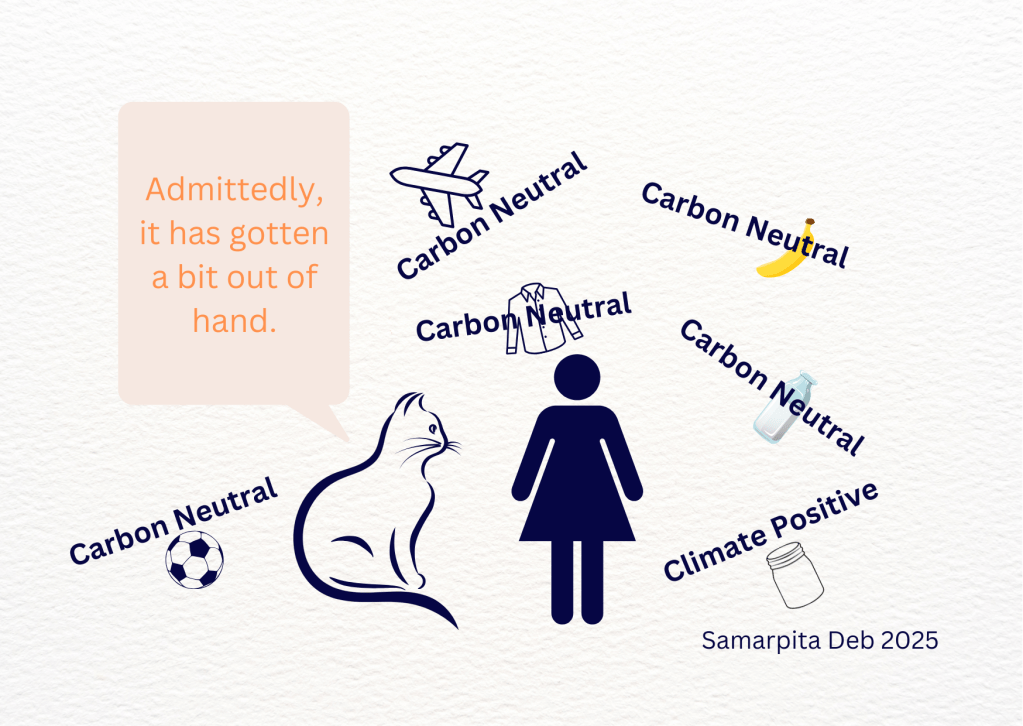
One of the key impacts of the EU Directive 2024/825 is the prohibition of claims that a product has a neutral, reduced, or positive impact on the environment simply because the producer is offsetting emissions. The forthcoming Green Claims Directive is expected to reinforce this stance and impose even stricter requirements. However, this legislative approach aligns with prevailing judicial trends.
So, what does carbon neutrality mean? Why is the EU targeting such claims? And what can in-house lawyers do to ensure compliance?
I think, we do and will continue to have, space for carbon neutral claims when done the right way.
Understanding Key Terms
To comprehend the EU’s position, it is essential to understand some frequently used technical terms that often underpin legal judgments and legislation.
Net Zero vs. Carbon Neutral
Two commonly used but distinct terms in corporate communications are “Net Zero” and “Carbon Neutral.”
While these terms should, in theory, be equivalent, in practice, “carbon neutral” is often considered a less rigorous, interim claim. It typically involves an organization purchasing credits (reductions or removals) to compensate for its remaining emissions, often as a step toward a broader net zero goal.
In contrast, “net zero” is achieved through deep emissions reductions, with only residual greenhouse gas (GHG) emissions being offset using high-integrity credits.
Carbon Market Projects and Credit Integrity
Carbon removal projects can take several forms, such as:
- Biosphere storage: Restoring ecosystems like woodlands, grasslands, wetlands, and marine habitats or enhancing soil carbon on agricultural land.
- Geosphere storage: Extracting CO2 from the atmosphere and storing it geologically, such as through direct air capture with geological storage (DACCS) or converting atmospheric carbon into rock through remineralization.
The quality of carbon credits varies based on the risk of reversal (i.e., the likelihood of the stored carbon being re-released into the atmosphere):
- High Integrity (Long-Term): Geological storage and mineralization offer low reversal risks and long-term durability (centuries to millennia) but are costly and in limited supply.
- Medium Integrity (Medium-to-Long-Term): Well-managed, resilient ecosystems can provide benefits if maintained, but they remain vulnerable to climate change and human interference.
- Low Integrity (Short-Term): Afforestation projects, especially non-native monoculture plantations, carry a higher risk of reversal.
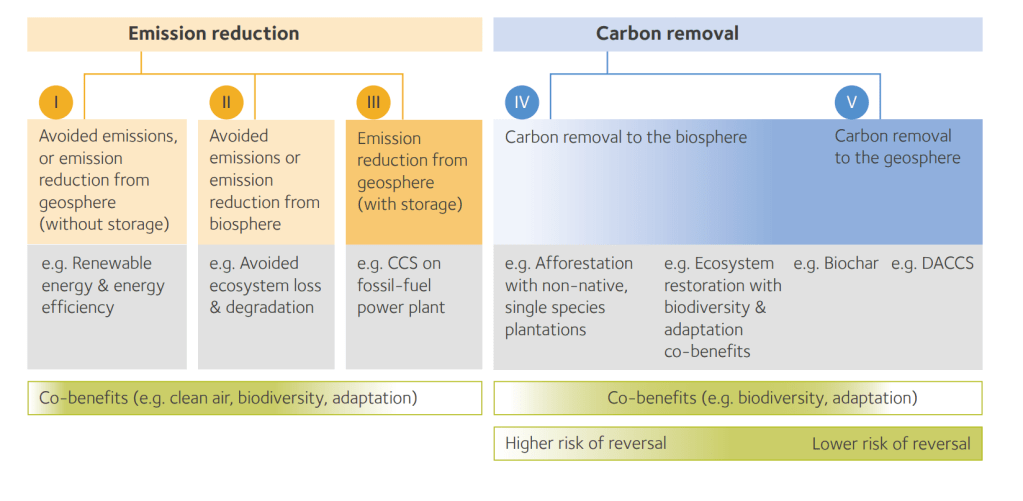
Image from The Oxford Principles for Net Zero Aligned Carbon Offsetting (Revised 2024) here
Issues with Carbon Markets
The Oxford Offsetting Principles highlight widespread deficiencies in carbon markets, particularly in projects focused on emissions avoidance, which often suffer from poor methodologies and faulty assumptions. Many voluntary carbon market standards fail to ensure environmental integrity.
Beyond methodological shortcomings, some carbon offset projects can negatively impact biodiversity, water and nutrient cycles, food security, livelihoods, and land rights. These issues can undermine broader societal goals, such as climate justice.
Despite these concerns, the Science-Based Targets initiative (SBTi) Report has not dismissed carbon credits outright. Instead, its report on carbon credits calls for continuous scrutiny and improvement, reflecting the complexity of the global debate over their legitimacy.
Why Carbon Neutral Claims Based on Offsetting Constitute Greenwashing
Recent EU case law reveals consistent reasoning across jurisdictions:
- Emission cuts and offsetting are not equivalent: Emissions reduction creates a tangible impact, whereas offsets are often unreliable.
- Consumer deception: Carbon neutrality claims influence purchasing decisions, but offsetting-based claims are often too vague to accurately convey the actual impact.
- Low-integrity projects dominate: Courts are particularly critical of companies relying on low-quality offsets.
- Scope 3 emissions exclusion: Failing to account for full supply chain emissions misleads consumers.
- Insufficient disclaimers: Disclosures only on websites, rather than in direct advertisements, are deemed inadequate.
Regulatory and Legal Actions Against Greenwashing
Regulators have intensified scrutiny of carbon neutrality claims. For instance, recently the European Commission along with EU consumer authorities launched greenwashing action against 20 airlines over misleading greenwashing practices, focusing on claims made CO2 emissions from flying could be offset (a) by paying additional fees to support climate projects or (b) the use of sustainable aviation fuel.
In 2023, the European Consumer Organisation launched a complaint that targeted misleading climate-related claims by several European airlines which gave consumers the impression that flying is sustainable.
Some Recent Court Cases
Carbon Neutral Fruit Gummies
The highest German civil court delivered a verdict against a fruit gummy manufacturer in regard to the use of climate neutral in product advertising.
The manufacturer had advertised in a trade magazine that since 2021, it has been producing fruit gummies that are carbon-neutral. The German Competition Commission challenged this advertisement as being misleading on grounds that readers will think that fruit gummies were produced without generating CO2 emissions.
In June 2024, the highest German civil court, the German Federal Court of Justice decided that the advertisement was indeed misleading because:
- Advertising a product as climate neutral can be considered to be a significant driver of purchasing decisions;
- Similar to health-related advertising, environmental claims made in advertising have a stricter legal standard due to the general sentiment of the environment being a valuable asset that needs protection;
- As the general public usually has little factual information behind these ambiguous claims there needs to be strict requirements including the need to clarify the meaning and content.
- While reduction and compensation of CO2 emissions are both possible ways of achieving climate neutrality, they are not equal. Reduction is always preferable to offsetting.
- Ambiguous terms can only be used if the company is able to explain how such neutrality is achieved, including both reduction and offsetting measures and such explanation must be included directly in the advertisement without requiring the consumer to visit a separate website.
Carbon Neutral Football
In a concerted action with similar actions filed in the UK, France, Belgium and the Netherlands, Klima-Allianz (Switzerland based coalition of 140 civil society organisations), filed a claim that FIFA’s advertising of the 2022 Football World Cup in Qatar as carbon neutral, was misleading.
The Swiss Fair Advertising Commission upheld all five complaints and reiterated that strict standards apply when advertising carbon neutrality and that factual claims must be accurate and not misleading, which extends to environmental claims.
CO2 Neutral Driving
The contested advertisement on a oil and gas company’s website contained several statements like “Make a difference. Drive CO2 neutral”. The complaint alleged that the company falsely claimed that the damage caused by CO2 emissions can be offset or neutralized through voluntary carbon credits.
The Dutch Advertising Code Committee held that the average consumers would understand the term “neutralized” to mean that the harm caused by CO2 emissions was completely compensated by offsetting measures and that the company did not guarantee the full offsetting in practice. The claim were considered too absolute, guaranteeing a result which was not certain. Thus, the Committee found the advertising claims to be misleading.
Climate Neutral Detergent
Whether advertising on detergents as ‘climate neutral’ was misleading and in breach of the German Act against Unfair Competition.
The Higher Regional Court of Frankfurt am Main held that advertising of a company or a product as climate neutral may have a significant influence on a purchase decision. The Court found that average consumers understood climate neutrality in the sense of a ‘balanced balance sheet’. While the Court acknowledged that that climate neutrality could be reached through both emission reduction and offsetting measures, consumers need to know whether climate neutrality concerned the whole company and/or certain products and the method to arrive at neutrality due to greenwashing concerns surrounding set-off.
The Court held that, in principle, consumers assumed that all significant emissions including Scope 3 were compensated. But because Scope 3 was not considered and there was no explicit information clarifying this, the advertisement was misleading.
Climate Neutral Coffee
A supermarket chain was accused of making misleading advertising claims regarding the marketing of a “climate-neutral coffee beverage.”
The Amberg Regional Court upheld the lawsuit as the climate neutrality was based solely on the purchase of emission credits from short-term forest projects and the court held that the selected forest protection projects are not sufficient to advertise a product as climate-neutral.
Climate Neutral Flying
An airline was accused of making misleading advertising claims that suggest products, companies, or services are “climate neutral.”
The Cologne Regional Court prohibited the airline from advertising flights, whose emissions are offset with a few euros, as “CO2-neutral” in the form that occurred at the time of the lawsuit as short-term forest protection projects used for the offsetting are not suitable for achieving actual compensation.
Climate Positive Baby Food Jars
The Fair Advertising Commission (FAC) is a non-judicial body that examines complaints alleging violations of the Swiss Fairness Principles in Commercial Communication.
The Foundation for Consumer Protection (Stiftung für Konsumentenschutz) filed a complaint with the FAC against a German producer of baby food concerning the company’s advertisement of its baby food jars as “climate positive” (case 169/23).
The FAC held that this advertisement was misleading and recommended that the company refrain from it unless it can provide full proof of the calculation of all climate-relevant effects associated with production carried out in accordance with generally accepted methods, on the one hand, and unambiguous proof of the full overcompensation of these effects.
Climate Neutral Milk
A dairy company used the term “climate neutral” on the product packaging, the website, and in videos and commercials.
The Dutch Advertising Code Committee was of the view that an average consumer would interpret these claims in the sense that the production of the products had no impact on the climate in that adverse affects were completely cancelled out. Ultimately the Committee found that the dairy company had not demonstrated the absolute certainty required with regard to the full and permanent offsetting of emissions through its forest projects. Thus, the accuracy of an absolute claim such as “climate neutral” had not been demonstrated.
Carbon Neutral Business
A Facebook ad for a clothing retailer, featured an image of a print cotton shirt. Text on the post stated “[…] We’re proud to be a Carbon Neutral business.
The Advertising Standards Authority in UK determined that there was no qualifying information in the ad outlining the basis for the “carbon neutral” claim (whether through reduction or offsetting), which was significant information that consumers needed to know in order to fully understand the claim’s meaning, the ad was misleading, in breach of the relevant codes of advertising.
Climate Neutral Bananas
A sticker on bananas included the statement “CO2 Neutral.” The Dutch Advertising Code Committee found the sticker on the bananas with the claim “CO2 Neutral” to be misleading as it did not contain any reference to information about the interpretation of this claim. Because any context was lacking, the meaning of this claim was unclear to the average consumer. It was also held insufficient that the meaning of “CO2 Neutral” was clarified on a separate website.
Eco-Friendly Microfiber
A Italian manufacturer filed a request to obtain interim injunction against one of its main Italian competitors who advertised its suede-like microfiber product to the public as having many green features and promoted it as environmentally friendly. The “green claims” included statements such as “made of recycled polyester”, “environmentally friendly”, “natural choice”, “the first and only microfiber that guarantees environmental sustainability throughout the productive cycle”, “reduction of carbon footprint through polyester recycling”.
The Court ruled in favor of the claimant, stating that these statements were vague, generic, false, and non-verifiable and needed to be immediately removed from any website, social media platform, tv advertisement, magazines, and other promotional material.
How Can the In-House Legal Teams Help with Compliance

- Set Up Google Alerts
Google Alerts can help track regulatory changes and litigation trends. To avoid alert fatigue, a weekly summary is recommended over daily notifications.
- Monitor Ongoing Litigation
Resources like the Sabin Center for Climate Change Law’s litigation database provide up-to-date case law insights. Reviewing these cases monthly can help identify emerging trends and update compliance strategies accordingly.
- Subscribe to Law Firm Updates
Many major law firms with ESG practices provide valuable, digestible updates on regulatory changes and legal precedents. Subscribing to their newsletters can be an effective way to stay informed.
- Conduct Norms-Based Research
Norms-based research involves evaluating a company’s policies and practices against internationally recognized standards, such as the UN Global Compact or OECD guidelines. Regular self-assessment helps identify risks of misalignment between corporate messaging and actual practices, reducing exposure to greenwashing litigation.
You can find some more ideas here.
Stay informed,
Samarpita
All opinions are personal


 ESG for Lawyers
Leave a comment